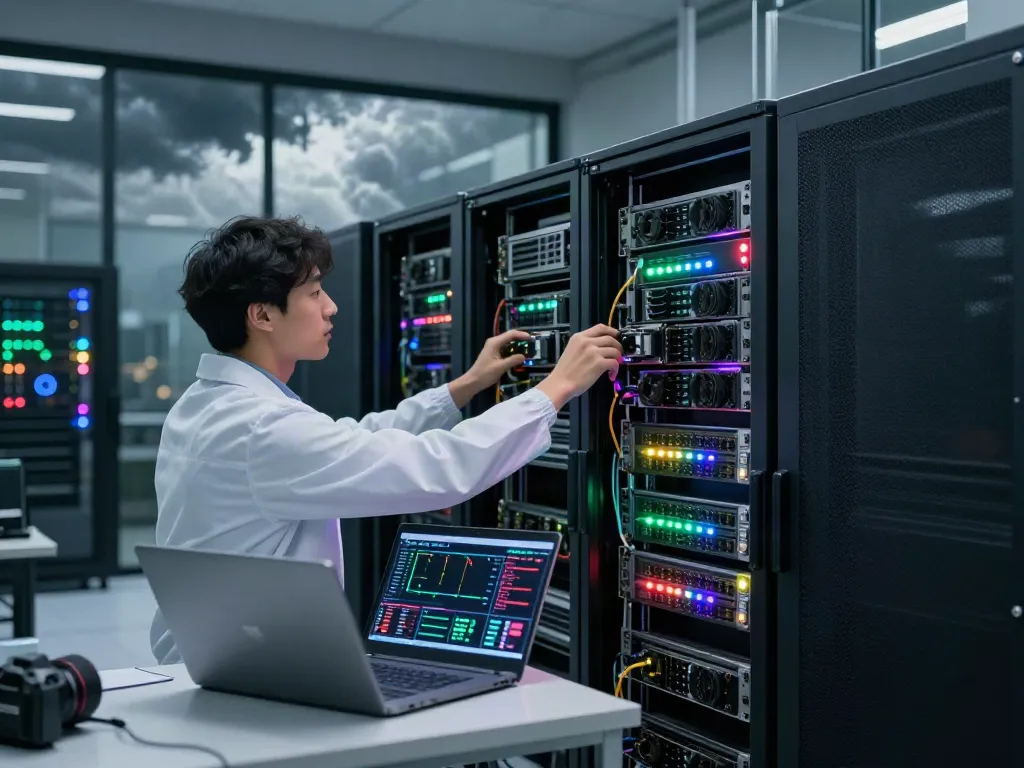
Understanding GPU Computing in the AI Era
As artificial intelligence (AI) continues to revolutionize industries, the role of GPU computing has become increasingly pivotal. Graphics Processing Units (GPUs) enable the rapid processing of vast amounts of data, which is essential for training complex AI models and conducting inference tasks efficiently. In an era defined by data-driven insights and real-time analytics, understanding how GPU computing operates is crucial for organizations looking to leverage AI capabilities effectively. When exploring options, GPU computing provides comprehensive insights into how power infrastructure supports AI applications.
What is GPU Computing?
GPU computing refers to the use of a Graphics Processing Unit to perform computations that traditionally took place on the Central Processing Unit (CPU). Unlike CPUs, which are designed for general-purpose processing and can handle a few tasks at a time, GPUs are built to manage thousands of threads simultaneously. This parallel processing capability makes GPUs particularly effective for tasks that involve large datasets, such as those found in machine learning and deep learning. Their architecture allows them to execute multiple operations at once, significantly speeding up data processing and analysis.
The Importance of GPU in AI Workloads
Within the AI landscape, GPUs are indispensable for various workloads, including training AI models, performing real-time data analytics, and deploying AI-driven applications. The high throughput of GPU processing enables organizations to process and analyze vast datasets, leading to faster decision-making and more accurate predictions. For instance, in image recognition tasks, GPUs can efficiently process numerous pixels simultaneously, leading to rapid advancements in computer vision applications.
Differences Between GPU and CPU Performance
The core difference between GPU and CPU performance lies in their architecture and processing capabilities. While CPUs are optimized for sequential task execution with high clock speeds and a few cores, GPUs consist of numerous smaller cores designed for parallel processing. This design allows GPUs to handle tasks like rendering graphics and executing simulations much more efficiently than CPUs. Consequently, workloads that require handling large volumes of data benefit more from GPUs, particularly in AI applications where speed and efficiency are paramount.
Role of GPUs in Power AI Infrastructure
As AI infrastructures become more complex, the demand for effective power management resources increases. GPUs play a crucial role in the power AI infrastructure by providing the necessary computational power to execute AI tasks at scale. This section delves into how GPUs contribute to AI factory operations and the overall AI Token Economy.
How GPUs Power AI Factories
AI factories rely on robust GPU infrastructure to deliver services efficiently. These factories are designed to process vast amounts of data, employing GPUs to handle the complex computations required for training and deploying AI models. The electricity required to power these GPUs is directly linked to the operational capabilities of AI factories, allowing them to run multiple AI applications simultaneously. With the right power support, GPU farms can enhance processing capabilities, accommodating growing workloads and ensuring scalability.
Contribution of GPUs to the AI Token Economy
In the AI Token Economy, GPUs are essential for powering token-metered services. Each AI request is broken down into input tokens, processed by GPUs, and generates output tokens. This model allows for efficient billing and resource allocation based on actual usage. As participants contribute to the power infrastructure behind AI operations, they not only support the computing needs of these factories but also stand to gain rewards based on their power contributions, making GPUs a vital part of the operational economics.
Scalable GPU Solutions and Their Benefits
Scalability is a key advantage of using GPU solutions in AI infrastructures. As demand for AI services grows, organizations can expand their GPU capabilities by adding more units to their existing setups. This flexibility enables businesses to scale operations quickly without the need for significant upfront investments in hardware or maintenance. Moreover, the ability to distribute workloads across multiple GPUs enhances efficiency and ensures consistent performance, critical for meeting diverse operational demands.
Choosing the Right GPU for AI Applications
Selecting the appropriate GPU for AI applications involves evaluating several performance metrics. Organizations need to consider their specific use cases, power requirements, and budget constraints to make informed decisions.
Evaluating GPU Performance Metrics
When assessing GPU performance, key metrics include processing power, memory bandwidth, and energy efficiency. Processing power, typically measured in teraflops, indicates how many calculations a GPU can perform per second, while memory bandwidth determines how quickly data can be transmitted to and from the GPU. For AI workloads, it is crucial to choose GPUs that balance these metrics to optimize performance and energy consumption for intensive tasks.
Future-Proofing Your GPU Investments
As technology evolves, organizations must ensure that their GPU investments remain relevant and capable of meeting future demands. This involves selecting GPUs that support the latest architectures and frameworks, such as NVIDIA’s Ampere or AMD’s RDNA. Future-proofing also means considering the integration of emerging technologies like AI accelerators or specialized chips designed for AI workloads.
Comparison of Leading GPU Brands for AI
When it comes to GPU options, several leading brands dominate the market, each offering unique features tailored for AI applications:
- NVIDIA: Known for its CUDA architecture, NVIDIA GPUs excel in deep learning and AI applications, providing extensive software support and optimization for various frameworks.
- AMD: AMD's GPUs are becoming increasingly capable in AI tasks, offering competitive performance, especially in tasks requiring high memory bandwidth.
- Intel: With the introduction of their Xe line, Intel is positioning itself to compete in the GPU market, focusing on versatility and integration with existing CPU architectures.
Challenges in GPU Computing for AI
Despite the advantages of GPU computing, organizations face several challenges when implementing GPU solutions for AI. Identifying these obstacles is crucial for developing strategies to mitigate their impact.
Common Obstacles in GPU Implementation
Organizations often encounter issues such as hardware compatibility, inadequate cooling systems, and limited budget allocations for GPU resources. These factors can hinder effective utilization and lead to suboptimal performance. Additionally, the complexity of setting up and managing GPU clusters can pose difficulties for teams without specialized expertise.
Energy Efficiency and Sustainability Considerations
As GPU computing requires significant amounts of electricity, energy efficiency and sustainability have become pressing concerns. Organizations must implement strategies to reduce energy consumption and carbon footprints, such as employing energy-efficient GPUs and optimizing workload management to minimize power wastage.
Managing Costs and Operational Risks
The high costs associated with GPUs and their maintenance can present challenges for organizations. Balancing operational expenses against the benefits of GPU computing is crucial for ensuring long-term sustainability. An effective approach includes regular assessments of GPU performance and usage to identify opportunities for optimizing expenses while maintaining operational efficiency.
Future Trends in GPU Computing for 2026 and Beyond
The landscape of GPU computing is continuously evolving, driven by advancements in technology and changing industry needs. Exploring these trends can provide valuable insights for organizations looking to stay ahead in the competitive AI space.
Emerging Technologies in GPU Architecture
Innovations in GPU architecture, such as the integration of tensor cores and dedicated AI processing units, are shaping the future of GPU computing. These developments enhance the capabilities of GPUs, enabling more efficient processing of AI workloads and real-time analytics.
Impact of Quantum Computing on GPU Performance
Quantum computing promises to revolutionize the way complex calculations are performed. As quantum technologies mature, they may complement traditional GPU computing, allowing for faster data processing and enhanced model training capabilities. This synergy could unlock new potential in fields such as drug discovery and advanced materials research.
Predictions for GPU Usage in Industries
By 2026, GPU usage across various industries is expected to expand significantly. Sectors such as healthcare, finance, and transportation are likely to harness GPU computing for tasks ranging from predictive analytics to enhanced operational efficiency. Organizations that leverage GPU technology effectively will find themselves at a competitive advantage in an increasingly data-driven world.
What is the significance of GPU computing in modern AI?
The significance of GPU computing in modern AI cannot be overstated. It enables organizations to process vast amounts of data quickly, facilitating the development of advanced AI applications and models. The efficiency and speed of GPU processing are pivotal in translating AI theory into practical applications, driving innovation across industries.
How do I choose the best GPU for my needs?
Choosing the best GPU involves assessing your specific application requirements, such as processing power, memory capacity, and intended workloads. Additionally, consider future scalability and compatibility with existing infrastructure to ensure long-term utility.
What are the future trends in GPU technology?
Future trends in GPU technology include the rise of specialized AI chips, advancements in quantum computing integration, and the development of more energy-efficient GPUs. As AI continues to evolve, these trends will significantly impact how organizations leverage GPU technology.
What challenges do organizations face with GPU computing?
Organizations face numerous challenges with GPU computing, including high initial costs, maintenance requirements, and ensuring compatibility with existing systems. Additionally, energy consumption and the need for specialized knowledge can complicate GPU deployment.
How can I measure the performance of my GPU?
Performance measurement can be conducted using benchmarks that assess processing speed, memory bandwidth, and energy efficiency. Monitoring tools and software solutions can help organizations gain insights into GPU utilization and performance metrics, allowing for informed optimization decisions.