Colour changes the character of an engagement ring immediately. While colourless stones create brilliance through light and contrast, sapphire introduces depth, richness and a visual identity that can make even a restrained setting feel distinctive. Blue sapphire in particular has an enduring association with fine jewellery, yet it works just as convincingly in contemporary designs as it does in traditional ones.
For couples drawn to this aesthetic, timeless lab grown sapphire engagement rings offer a way to place colour at the heart of the design. Lab-grown sapphires share the essential crystal structure and chemical composition of their mined counterparts, while providing the controlled beauty expected from modern fine jewellery. Choosing successfully means considering tone, cut, setting and metal as parts of one composition rather than judging the centre stone in isolation.
Why Sapphire Colour Has Enduring Appeal
Blue sapphire occupies an unusual position in engagement jewellery: it is instantly recognisable, yet its appearance can vary considerably according to tone and lighting.
A deep blue stone creates a strong, formal presence, particularly against a bright white metal. A more vivid blue can feel fresher and more contemporary. Neither approach is inherently superior. The best colour is the one that remains attractive to the wearer across different environments rather than looking impressive only under showroom lighting.
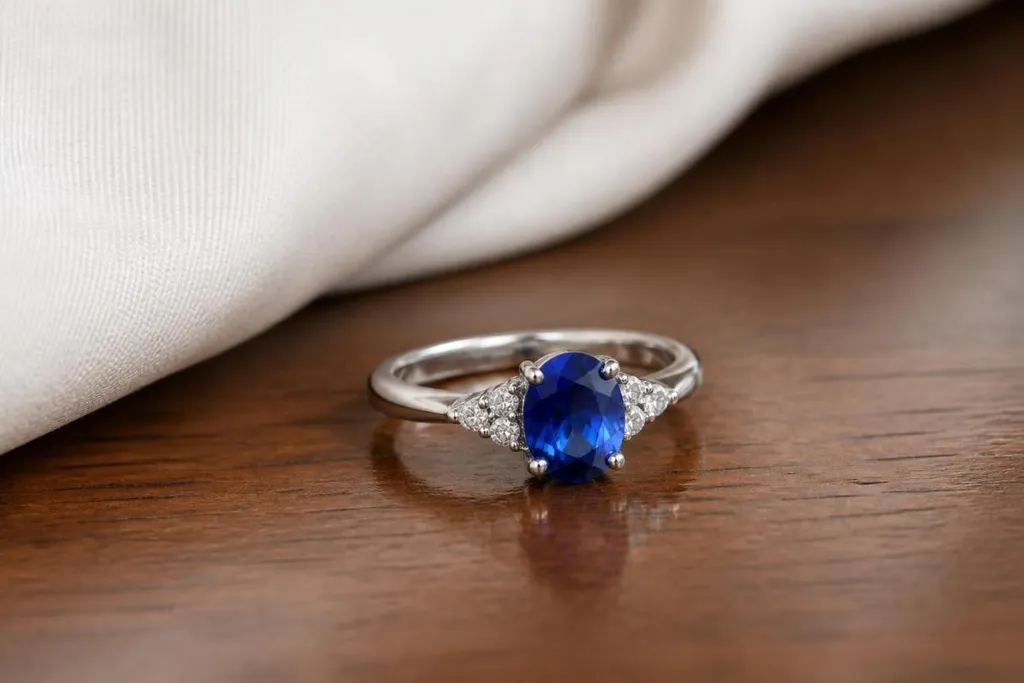
Sapphire also provides a natural focal point. A coloured centre stone does not necessarily need a large carat weight to establish presence because the contrast between the sapphire setting and surrounding diamonds can make its outline immediately noticeable.
This can suit someone who wants a distinctive engagement ring without relying on scale alone.
Cut Determines More Than Shape
The cut of a lab-grown sapphire influences both its silhouette and how effectively it handles light. Unlike choosing a shape purely for fashion, the decision should consider how the facets interact with the stone's colour. Oval and cushion cuts are particularly well suited to sapphire because their curved outlines complement the richness of blue. An oval can create an elegant lengthening effect on the finger, while a cushion offers softer proportions with a romantic character.
Round stones provide symmetry and work naturally in classic settings. Emerald-style cuts introduce a more architectural appearance, emphasising clean lines and broader areas of colour rather than lively brilliance. Proportion matters alongside size. Someone may prefer a larger sapphire because a broad cushion or elongated oval provides the finger coverage they enjoy. Another wearer might deliberately choose a smaller centre stone surrounded by diamonds, allowing colour and contrast to create the visual impact instead.
Choosing a Setting Around a Sapphire
The setting determines how prominently the sapphire's colour is expressed.
A solitaire offers the cleanest approach, giving the blue centre stone little competition. This can feel particularly modern when paired with a fine band and restrained claws.
Halo settings create a different effect. Surrounding a blue sapphire with colourless diamonds establishes a bright border that can make the centre appear even richer by comparison. Diamond-set shoulders continue that contrast along the band, while trilogy designs can frame a sapphire with two complementary side stones.
Metal choice is equally influential. Platinum and white gold provide a cool backdrop that reinforces blue tones and allows colourless accent diamonds to blend naturally into the setting. Yellow gold creates a warmer contrast, giving the sapphire a more traditional fine-jewellery character. Rose gold offers a less expected combination, softening the overall palette.
The right pairing depends on whether the wearer wants harmony or deliberate contrast.
Practicality Matters for an Everyday Ring
An engagement ring is exposed to regular contact with clothing, surfaces and everyday products, so durability should form part of the decision. Sapphire is a hard gemstone, ranking 9 on the Mohs scale, which makes it well suited to jewellery intended for frequent wear. Hardness, however, does not mean indestructibility. Strong impacts can still damage a gemstone or its setting.
Claws and other setting components should therefore be checked periodically, particularly on rings worn every day. Gentle cleaning also helps preserve the sapphire's appearance, as lotions and soap residue can reduce the liveliness of its surface. It is worth considering the future wedding band at the same time. The engagement ring's profile will determine whether a straight band sits closely alongside it or whether a shaped design creates a more harmonious fit.
Final Thought
Lab-grown sapphire engagement rings demonstrate that timelessness does not require a colourless centre stone. Sapphire brings depth and individuality while remaining closely connected to a long tradition of significant fine jewellery.
The strongest designs allow that colour to lead. By choosing a flattering cut, balanced proportions and a setting that either complements or contrasts with the blue, a lab-grown sapphire can create an engagement ring that feels distinctive today without depending on a passing trend.